

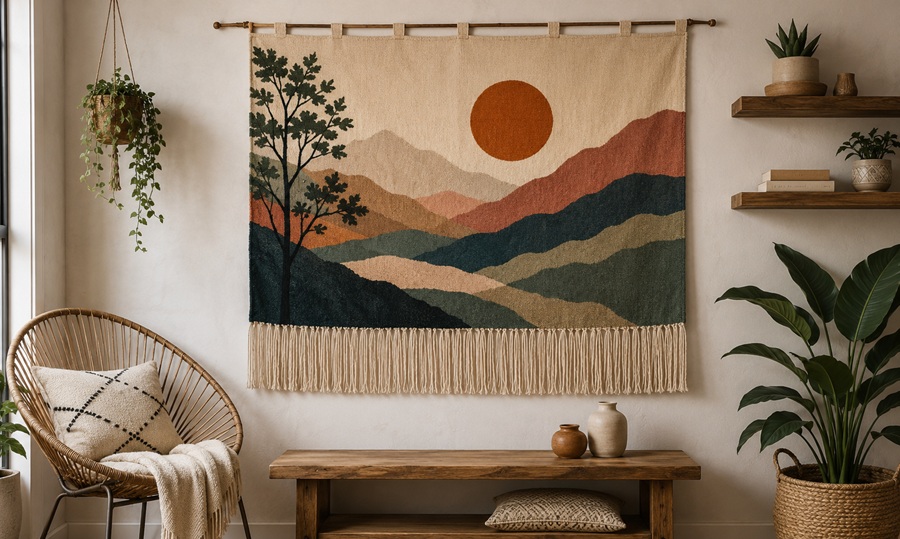
A tapestry wall hanging solves a large blank wall for $20–$80, adds texture and color without a single hole drilled if you use the right hardware, and works whether you own or rent. Compared to framed art, tapestries cover far more square footage per dollar, which makes them one of the fastest fixes for the kind of oversized wall that makes a room feel unfinished. This guide covers the exact problem tapestries solve, how to size and hang one, and how to make it look intentional rather than like a dorm-room afterthought.

The Problem: Bare Walls and Renter Restrictions
Large blank walls — behind a bed, above a couch, or along a stairwell — are one of the most common complaints in room styling, and they’re expensive to fix with framed art alone, since covering that much square footage with multiple frames adds up fast. Renters face an added constraint: many lease agreements restrict or ban drilling into walls, which rules out gallery walls, heavy mirrors, and anything needing anchors.
On top of that, homeowners and renters alike often want texture and warmth in a room without committing to a permanent piece, especially in a space that might get redecorated within a year or two.
The Solution: Sizing, Hanging Methods, and Materials
Sizing follows a simple rule: a tapestry should cover roughly two-thirds of the wall’s width for a balanced look, or scale to the furniture below it — a queen bed typically needs a tapestry 60 to 80 inches wide, while a full wall statement piece can run up to 100 inches or more.
For hanging without wall damage, three methods work well depending on the tapestry’s weight and the wall type. A tension curtain rod mounted between two points (works well in alcoves or narrow walls) needs no hardware at all. Adhesive hook strips rated for the tapestry’s weight hold most lightweight cotton tapestries without leaving marks on painted drywall. A wooden dowel or curtain rod threaded through a rod pocket at the top of the tapestry, then hung from small adhesive hooks, gives the most polished, gallery-style look.
Material affects both look and durability. Cotton tapestries are the most common, affordable, and machine-washable option. Mandala and cotton-blend tapestries in mid-weight fabric tend to hang flatter against the wall than heavier woven textiles, which sometimes need a bit of steaming to fully flatten out after shipping.
Local Insights: Matching Tapestries to Room Style
Boho and eclectic rooms are the most natural fit for tapestries, especially mandala patterns, macrame-style woven pieces, or nature-inspired prints layered with plants and warm lighting. Minimalist rooms can still use a tapestry effectively by choosing a single solid or subtly patterned piece in a neutral tone, letting the texture do the work rather than the pattern.
In rental apartments and dorm rooms, tapestries tend to be layered with string lights, wall shelves, and other no-damage decor to build out a fuller look without any drilling. In more furnished, permanent homes, a single well-chosen tapestry often works better as a standalone statement rather than mixed with too many other wall elements.
Caring for a Tapestry Long Term
Most cotton tapestries can be machine washed on a gentle, cold cycle and air dried or tumble dried on low, though checking the specific care label matters since some heavier or specialty-woven tapestries recommend hand washing or spot cleaning only. Regular light dusting or a quick pass with a fabric shaver keeps a tapestry looking fresh between washes and prevents the buildup of dust that heavier woven textiles tend to trap over time.
Direct sunlight will fade any fabric over months or years, so a tapestry hung on a wall that gets strong afternoon sun will show more fading than one in a shadier spot. This isn’t a reason to avoid sunny walls entirely, but it’s worth knowing going in, especially for a piece meant to last several years rather than being swapped out seasonally.
Pairing a Tapestry With the Rest of the Room
A tapestry works best as an anchor piece rather than competing with too many other bold elements in the same room. If the tapestry has a busy pattern, keeping the bedding, rug, and other textiles more neutral lets the wall piece stand out instead of getting lost in visual noise. Conversely, a more solid or subtly patterned tapestry gives room to layer in a patterned rug or bedding without the space feeling overwhelming.
String lights, small wall shelves, or a scattering of smaller framed prints around the edges of a tapestry can add depth to the wall without competing with the main piece, which is a common approach in dorm rooms and rental apartments where the tapestry serves as the room’s central design statement.
Choosing the Right Tapestry Design
Mandala tapestries, with their circular, symmetrical patterns, remain one of the most popular choices because the design works at almost any scale and suits a wide range of color schemes. Nature scenes, botanical prints, and abstract patterns are close behind in popularity, each lending a slightly different mood — botanical prints tend to feel calmer and more grounded, while abstract geometric patterns feel more modern and energetic.
For a first tapestry, it’s worth choosing a design with some color variation rather than a single flat color, since texture and pattern are part of what makes tapestries feel more dynamic than a flat painted wall. That said, a solid-color or subtly textured tapestry can work very well in a more minimalist room where the goal is warmth and texture rather than a bold visual statement.
Where to Buy Quality Tapestries
Tapestries are widely available through home decor retailers, online marketplaces, and independent artists selling through platforms like Etsy, with quality varying significantly by source. Thicker, more tightly woven cotton generally indicates a higher-quality piece that will hang flatter and last longer than thinner, more loosely woven options, which is worth checking in product photos or reviews before buying, especially online where the fabric can’t be touched before purchase.
Frequently Asked Questions
How Do You Hang a Tapestry Without Nails?
Three no-damage methods work for most walls and tapestry weights:
- Tension rod — wedge a spring-loaded curtain rod between two walls or a window alcove, then drape the tapestry over it.
- Adhesive hooks — use removable strips rated for the tapestry’s weight, placed at the top corners and center for even support.
- Rod and hooks combo — slide a lightweight dowel through the tapestry’s top pocket (or pin a pocket if there isn’t one), then rest the dowel ends on two small adhesive hooks.
What Size Tapestry for a Queen Bed Wall?
For a queen bed, a tapestry between 60 and 80 inches wide typically covers the wall behind the headboard well without overwhelming the room. Going up to 90 or 100 inches works for rooms with higher ceilings or when the tapestry is meant to be the room’s main visual anchor rather than just a backdrop.