


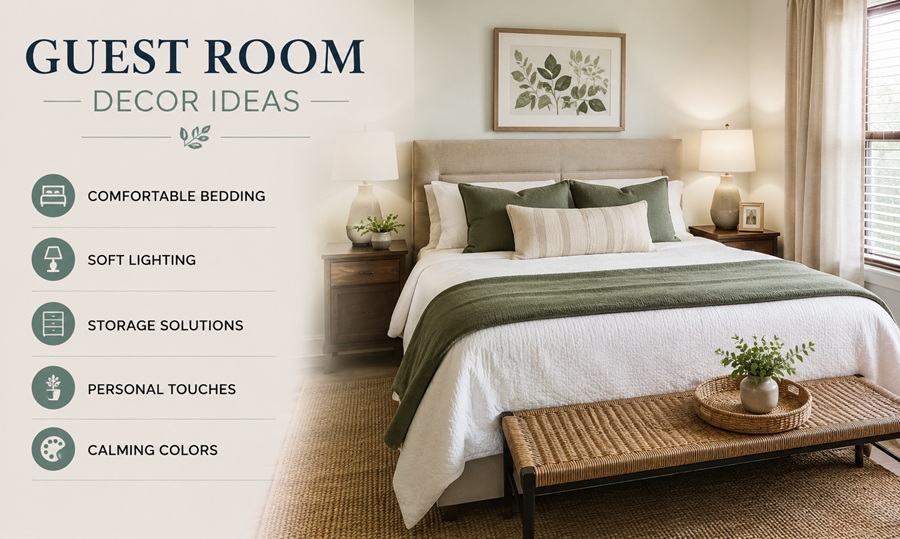
A guest room only gets used occasionally, which is exactly why it’s easy to overlook. Planning it well doesn’t take a full renovation, just some attention to the details a visitor actually notices during a short stay.

Start With the Guest’s Perspective
Before choosing colors or furniture, think through what someone unfamiliar with your home actually needs. They don’t know where the extra towels are, whether the water takes a minute to heat up, or which lamp switch turns on. A guest room that anticipates these small unknowns feels more comfortable than one that simply looks nice.
Consider who typically stays in the room. A guest room mainly used by aging parents has different needs than one used by young cousins or overnight friends, particularly around lighting, bed height, and accessibility.
Furniture and Layout Essentials
A functional guest room generally needs:
- A comfortable bed suited to the room size (a queen if space allows, a full or daybed if it doesn’t)
- A nightstand with a reachable outlet nearby
- A dresser or luggage rack so guests aren’t living out of a suitcase on the floor
- A chair or small seating area, if space allows
- A mirror, since many guest rooms lack one entirely
Keep walkways clear, especially around the bed, since guests are navigating an unfamiliar layout, often in low light.
Bedding and Comfort Details
Bedding matters more in a guest room than almost any other decor choice, since it directly affects how well someone sleeps. A supportive mattress topper, breathable sheets, and a couple of extra blankets folded at the foot of the bed cover a wider range of temperature preferences than a single heavy comforter.
Extra pillows in different firmness levels help too, since guests rarely ask for a different pillow even if the one provided doesn’t work for them.
Storage Guests Actually Need
Even a short stay benefits from real storage, not just a corner to set a suitcase. Useful additions include:
- Empty drawer space, even just one or two drawers
- A few empty hangers in the closet
- A small basket or tray for personal items like keys or a phone charger
- A luggage rack or low bench so a suitcase doesn’t have to sit open on the floor
Guests are far less likely to feel at home if every drawer and hook is already occupied by household overflow items. It’s worth doing a quick check before each stay to confirm the space hasn’t quietly filled back up with seasonal storage or items that migrated in between visits.
Color Palette and Style Choices
A guest room benefits from a slightly more neutral approach than the rest of the house, mainly because it needs to feel welcoming to a wider range of people over a longer period of time. Soft neutrals, muted blues, and warm greys tend to work well as base tones, since they’re calming without feeling cold or sterile.
That doesn’t mean the room has to be plain. Layering in texture through a patterned throw, a textured rug, or artwork with some color adds personality without requiring a full redesign later if tastes change. Choosing a palette that can flex with small seasonal touches, like a different throw pillow cover or a seasonal candle, keeps the room feeling current without repainting every year.
Natural materials, like a wood nightstand or woven baskets for storage, also tend to age well in a guest room, since they don’t tie the space to one narrow decor trend that might feel dated within a few years.
Finishing Touches That Make a Difference
Small details tend to leave a stronger impression than statement decor pieces. A reading lamp with a warm bulb, a water carafe on the nightstand, a couple of books or magazines, and blackout or lined curtains all add comfort without much cost. A small sign or note with the Wi-Fi password saves guests from having to ask.
A few other touches worth considering include a phone charging cable left in a visible spot, a small clock for guests who don’t want to rely on a phone overnight, and a spare set of slippers for colder floors. None of these require much investment, but they consistently show up as the kind of detail guests remember and mention afterward.
Accommodating Different Types of Guests
Not every guest room serves the same purpose year-round, so it helps to think through the range of people likely to stay there. A room mainly hosting older relatives benefits from a slightly firmer mattress, a nightlight for late-night trips to the bathroom, and a bed that isn’t too low to get in and out of comfortably. A room used more often by younger guests or friends can lean into a more casual setup, with flexible seating and simpler decor that’s easy to reset between visits.
If the guest room doubles as a home office or hobby space the rest of the time, it’s worth planning storage that can be quickly cleared away, such as a closet organizer or a rolling cart, so the room can transition to a comfortable guest space without a lengthy cleanup process each time.
Preparing the Room Before Guests Arrive
- Wash all linens, even if the room hasn’t been used recently, since stored fabric can pick up a musty smell.
- Test the lighting and outlets, replacing any bulbs that have burned out.
- Clear out any storage overflow that’s crept into the closet or drawers.
- Set out fresh towels and a few basic toiletries in case something is forgotten.
- Check the temperature of the room, since guest rooms are sometimes less used and can run colder or warmer than the rest of the house.
- Do a quick walkthrough as if you were the guest, checking for anything confusing or missing.
Frequently Asked Questions
What’s the most important thing to prioritize in a guest room on a small budget?
Bedding quality tends to matter more than furniture or decor, since comfort during sleep is what guests remember most.
Should a guest room have a theme?
Not necessarily. A neutral, comfortable palette generally works better than a strong theme, since it suits a wider range of guests and stays over multiple years without feeling dated.
How can I make a small guest room feel less cramped?
Lighter wall colors, a mirror, and keeping furniture to the essentials all help a small guest room feel more open.
Do guest rooms need blackout curtains?
They’re not required, but they help guests on different sleep schedules, especially those adjusting to a new time zone or an unfamiliar sleep environment.
What should always be stocked in a guest room, even for a one-night stay?
Fresh linens, a couple of towels, an extra blanket, and a lamp that’s easy to find in the dark cover most short-stay needs.
How often should a guest room be refreshed or updated?
There’s no strict timeline, but checking bedding condition, mattress comfort, and storage clutter once or twice a year keeps the room ready without a full redecorating project.
Is it worth investing in a nicer mattress for a guest room that’s rarely used?
It depends on how often the room gets used and by whom, but a supportive mattress is one of the few upgrades that directly affects how guests remember their stay, even for occasional use.