

Glass vases are one of the most versatile pieces in home decor — they work with fresh flowers, dried arrangements, branches, or completely empty as a sculptural object on their own. Despite that flexibility, a few persistent myths keep people from using them well, from assuming every glass vase is delicate to thinking clear glass is too plain to stand out. Here’s what’s actually true, and how to get more use out of a glass vase than just “container for flowers.”

Myth vs. Reality
Myth: glass vases are always fragile. Reality: thickness and glass type matter far more than the material itself. A thin, hand-blown vase is delicate, but many decorative glass vases sold today use thicker soda-lime or borosilicate glass that holds up fine to normal handling, cleaning, and even light bumps.
Myth: glass vases only work with fresh flowers. Reality: dried florals, pampas grass, branches, and even decorative stones or fairy lights all work well in a glass vase, and a dried arrangement lasts far longer than fresh flowers without needing water changes.
Myth: clear glass is boring. Reality: clear glass is a background, not a limitation — it lets the color and shape of whatever’s inside take center stage, and it pairs with literally any existing color scheme, which colored or patterned vases can’t always do.
Facts: Shapes and Their Best Uses
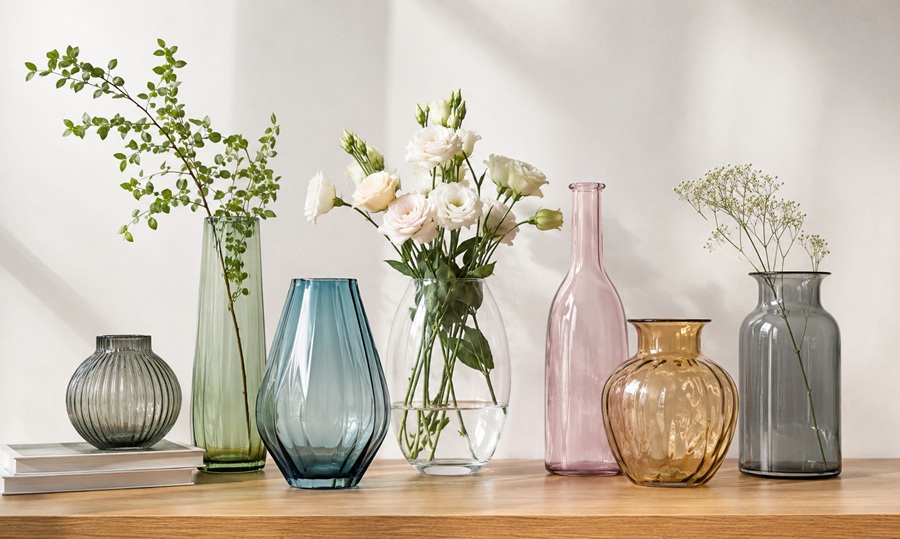
Cylinder vases are the most versatile shape, working for everything from a single stem to a full bouquet, and they’re the easiest shape to find in multiple heights. Bud vases — narrow-necked and small — are built for one to three stems and work best grouped in a cluster of three or five rather than alone.
Wide-mouth vases suit branches, pampas grass, or loose, wild arrangements that need room to spread rather than being pulled tight into a narrow neck. Bottle-shaped and vintage apothecary vases work best as standalone sculptural pieces or with a single dramatic stem, since their narrow openings don’t accommodate large arrangements.
Practical Advice: Styling With or Without Flowers
For dried arrangements, pampas grass, eucalyptus, and bunny tail grass all hold their shape and color for months without water, making them a low-maintenance option for a console table or mantel. For a more sculptural look, a cluster of three vases in varying heights — empty or holding a single dried branch each — creates visual interest without needing fresh flowers at all.
When styling with fresh flowers, cut stems at an angle and trim them every few days to extend the arrangement’s life, and change the water every two to three days to prevent cloudiness and odor. For empty, standalone styling, group vases in odd numbers and vary the heights slightly rather than lining up matching pieces at the same level.
Colored vs. Clear Glass
Colored glass vases add a stronger visual statement and can work as a room’s accent color on their own, without needing flowers or greenery to carry the look. Amber, sage green, and smoked gray are currently among the most versatile colored glass tones, pairing well with a range of existing color palettes without clashing.
Clear glass remains the more flexible long-term choice for anyone who redecorates or swaps out flowers often, since it never competes with a room’s existing colors. A practical middle ground many people land on is one or two colored statement vases mixed with several clear ones, giving both flexibility and visual interest without over-committing to a single trend.
Where to Buy Well-Made Glass Vases
Hand-blown glass vases, often found at craft fairs, artisan marketplaces, or specialty home stores, tend to have more character and slight variation from piece to piece, which some homeowners specifically look for. Mass-produced glass vases from larger home retailers are more uniform and generally more affordable, which makes them a practical choice for buying in matching sets or for anyone still experimenting with their preferred style.
Vintage and secondhand shops are worth checking too, since glass vases hold up well over decades and older pieces often have shapes and colors that aren’t currently in production, adding a bit of character that a brand-new vase can’t replicate.
Building a Small Collection Over Time
Rather than buying a full matching set at once, many people build a glass vase collection gradually, picking up one or two pieces at a time from different sources — a thrift find here, a gift there, a purchase from a trip. This approach naturally produces a more interesting, layered collection than a matching boxed set, and it spreads the cost out rather than requiring one larger purchase.
A useful starting point is one medium cylinder vase for everyday flowers, one or two small bud vases for single stems, and one larger statement piece for a mantel or entryway table. From there, additional pieces can be added as they’re found, without needing a specific plan for exactly what shape or color comes next.
Safe Placement Around Kids and Pets
In homes with young children or active pets, placement matters as much as the vase itself. Taller, narrower vases are more prone to tipping and are best kept on higher shelves or mantels out of easy reach, while shorter, wider-based vases are more stable on low tables where a passing hand or tail is more likely to make contact. For households with particularly curious pets or toddlers, weighted vase bases or double-sided furniture tape under the vase can add extra stability without changing how it looks.
Frequently Asked Questions
How Do You Clean a Glass Vase?
Fill the vase with warm water and a few drops of dish soap, add a handful of uncooked rice or crushed eggshells for scrubbing texture, and swirl or shake for about a minute before rinsing thoroughly. For hard water spots or cloudy residue, a mix of white vinegar and water left to soak for 15 minutes before rinsing typically clears it without scratching the glass.
What Size Vase for a Dining Table?
A dining table centerpiece works best with a vase between 8 and 14 inches tall, low enough that guests can see each other across the table when seated. Taller vases, above 16 inches, work better for entryway tables or mantels where sightline across the piece isn’t a concern.