

True blackout curtains block 95–100% of light using a tightly woven or triple-pass fabric, unlike “room darkening” curtains, which only reduce light by 70–90% through a thinner weave. The difference matters most for shift workers, light-sensitive sleepers, nurseries, and media rooms, where even a thin strip of light around the edges can be noticeable. Before buying, it helps to know the fabric type, the sizing rules, and the small installation details that separate curtains that actually block light from ones that just look like they should.

Checklist Before You Buy
Confirm these details before purchasing, since they matter more than the color or pattern:
- Window measurements — width and height, plus how far the curtain rod extends past the window frame on each side.
- Rod type — check whether you need a standard rod, a double rod (for pairing with sheers), or a track system for wider windows.
- Fabric weight and lining — confirm the listing specifies “blackout lining” or “triple weave,” not just “room darkening.”
- Panel width relative to window — panels should total roughly 2 to 2.5 times the window’s width when closed, for a full, gathered look that also blocks more light at the edges.
- Length — curtains should either just graze the floor or puddle slightly; stopping short of the floor lets in more light and looks unfinished.
Detailed Guide: How Blackout Fabric Works
True blackout curtains use one of two constructions: a tightly woven face fabric with a foam or acrylic backing, or a triple-weave fabric that sandwiches a black or dark middle layer between two outer layers. Both block nearly all light, but triple-weave fabric tends to drape more naturally and hang with a softer look than foam-backed panels, which can feel stiffer.
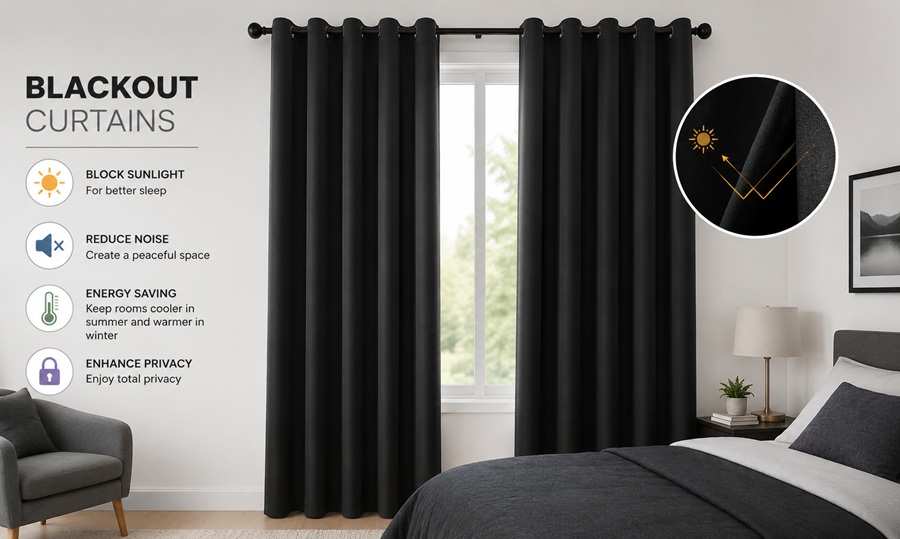
Beyond blocking light, blackout curtains also reduce outside noise and help regulate room temperature, since the dense fabric layer acts as a mild insulator against heat in summer and cold drafts in winter. This is why blackout curtains show up as commonly recommended for both nurseries (light and noise control) and home theaters (light control plus some sound dampening).
The best rooms for blackout curtains are bedrooms facing east or west (where morning or evening sun is strongest), nurseries where consistent nap schedules matter, and any media room or home theater where ambient light interferes with a screen.
Tips for Full Coverage
Mount the curtain rod 4 to 6 inches above the window frame and extend it 6 to 12 inches beyond each side of the frame — this lets the curtains fully clear the window and close without light leaking around the edges. Layering blackout curtains behind a sheer panel on a double rod adds flexibility for daytime use, letting in soft light without fully undressing the window.
For rooms that need the absolute darkest result, such as a nursery or a room for someone doing shift work, adding a wrap-around track or a slightly wider curtain rod that extends further past the frame closes the small light gaps that standard-width panels tend to leave at the edges.
Blackout Curtains vs. Room-Darkening Curtains
The core difference comes down to construction. Room-darkening curtains use a single layer of tightly woven or slightly thicker fabric that reduces light by 70 to 90%, which is enough for most people who just want a dimmer room, but it still allows a soft glow through the fabric and more visible light at the edges. Blackout curtains add either a dedicated opaque lining or a triple-weave construction specifically engineered to block essentially all light, at a moderately higher price point.
For most bedrooms, room-darkening curtains are enough. True blackout becomes worth the extra cost for shift workers sleeping during the day, nurseries where consistent darkness supports a nap schedule, and media rooms where even small amounts of ambient light affect picture quality on a screen.
Energy Savings From Blackout Curtains
Beyond light and sound control, the dense fabric layer in blackout curtains provides a real, if modest, insulating effect at windows, which are typically one of the biggest sources of heat loss and gain in a home. Closing blackout curtains during peak summer afternoon sun can measurably reduce heat entering a room, easing the load on air conditioning, and the same insulating effect helps retain warmth on cold winter nights when closed after dark.
This effect is more noticeable in older homes with single-pane windows or in rooms that get strong direct sun for several hours a day, and less dramatic in newer, well-insulated homes with efficient double-pane windows already doing most of that work.
Choosing Fabric and Color
Darker colors and heavier fabrics like velvet or heavyweight cotton tend to offer slightly better light-blocking performance than lighter colors and thinner fabrics, even when both carry a triple-weave or lined blackout construction, simply because dark, dense material absorbs more light overall. That said, modern blackout linings are effective enough that lighter colors — soft grays, creams, pale blues — still block the vast majority of light, so color choice can be driven primarily by the room’s decor rather than function alone.
Velvet blackout curtains add a more formal, luxurious look and slightly better sound dampening due to their weight, while cotton or linen-blend blackout curtains feel more casual and pair well with a wider range of everyday decor styles.
Blackout Curtains for Nurseries
Nurseries are one of the most common places blackout curtains get installed, since consistent daytime darkness supports more reliable nap schedules for infants and toddlers. For nursery use specifically, it’s worth choosing curtains free of chemical flame retardants when possible, and confirming any curtain rod hardware is mounted securely and out of reach as the child grows and becomes mobile.
Pairing blackout curtains with a white noise machine is a common combination in nurseries, since blocking both light and sudden household noise together tends to produce more consistent naps than either change alone.
Frequently Asked Questions
Do Blackout Curtains Really Block All Light?
True blackout curtains block 95 to 100% of direct light when properly sized and mounted, though some light can still leak in around the edges or through the top if the rod isn’t wide enough or mounted high enough. Correct sizing — extending the rod well past the window frame — closes most of that gap.
Are They Good for Reducing Noise?
Blackout curtains provide moderate noise reduction thanks to their dense, layered fabric, typically cutting outside noise by a noticeable but not dramatic amount. They’re not a substitute for soundproofing, but they do soften traffic noise, street sounds, and other ambient noise more than standard lightweight curtains.