

Ask a florist which vase shape they reach for most often and the answer is almost always the same: a plain glass cylinder. It’s the one shape that works for tall branches and short blooms alike, disappears visually behind whatever flowers are in it, and costs a fraction of decorative alternatives.

| Quick Answer
Glass cylinder vases come in heights from 4 to 24 inches and diameters from 3 to 10 inches, with the most versatile all-purpose sizes falling around 8 to 10 inches tall and 4 to 5 inches wide. Thicker glass costs more but resists chipping better for repeated event use. |
Why This Shape Dominates Florist Recommendations
A cylinder’s straight walls do something decorative vases with curves and necks can’t: they let stems stand exactly where you place them. Curved vases push stems toward the center or the rim depending on the shape, which fights against certain arrangement styles. A cylinder stays neutral.
Standard Sizes and What They’re Used For
| Height | Diameter | Best Use |
|---|---|---|
| 4–6 inches | 3–4 inches | Votive-style centerpieces, single stems |
| 8–10 inches | 4–5 inches | All-purpose bouquets, everyday arrangements |
| 12–14 inches | 5–6 inches | Tall branches, statement dining centerpieces |
| 16–20 inches | 6–8 inches | Event and wedding centerpieces, floor displays |
| 22–24 inches | 8–10 inches | Large-scale floor arrangements, entryway displays |
Thick Glass vs. Thin Glass
- Thin-walled vases cost less but chip and crack more easily, especially at the rim
- Thick-walled vases hold up far better for repeated events like weddings or rentals
- Weighted-base cylinders resist tipping with tall, top-heavy arrangements
- Seamless mold-blown glass shows fewer visible seam lines than pressed glass
Styling Ideas Beyond Fresh Flowers
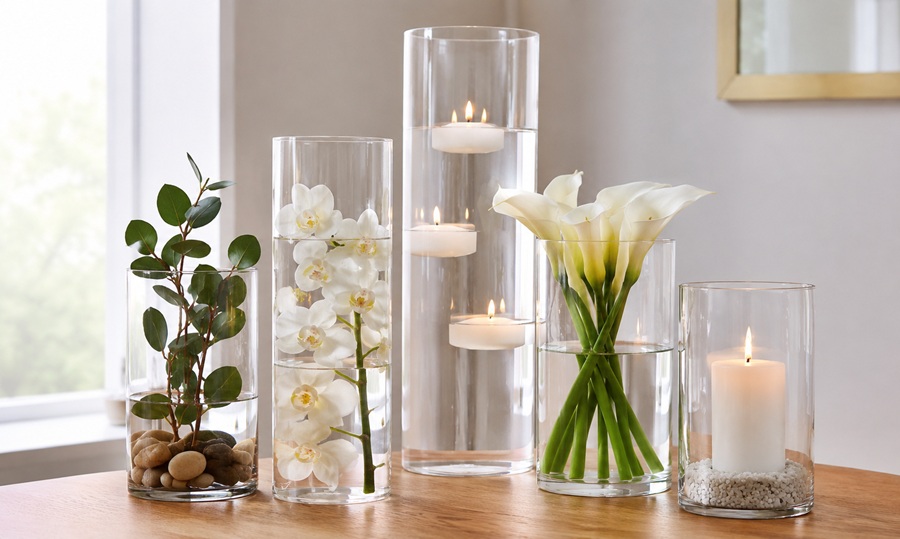
- Layer colored sand or decorative stones at the base before adding water and stems
- Group three different heights down the center of a dining table instead of one large arrangement
- Fill with fairy lights for a no-water evening centerpiece
- Use as a candle holder with a floating candle for a simpler, single-purpose look
- Repurpose as a kitchen utensil holder when not in decorative use
| Tip: For wedding or event use, buy 10 to 15 percent more vases than your headcount requires. Breakage and last-minute table changes are common, and matching a single missing vase later is nearly impossible. |
Cleaning and Care
Hard water stains and cloudy mineral rings are the most common complaint with clear glass vases, especially ones used repeatedly with fresh flowers. A soak in warm water with a splash of white vinegar, followed by a rinse and a lint-free cloth dry, clears most residue without scratching the glass.
- Avoid abrasive scrub brushes, which can create fine scratches that cloud clarity over time
- Dry upside down on a rack rather than with a towel to avoid lint and streaks
- For stubborn floral residue, a denture-tablet soak works surprisingly well
- Store empty vases with a paper towel between stacked pieces to prevent scratching
Choosing the Right Vase for the Occasion
| Occasion | Recommended Size | Style Note |
|---|---|---|
| Everyday home decor | 8–10 inches | Clear glass, minimal seams |
| Wedding reception tables | 16–20 inches | Weighted base, thick glass |
| Gift bouquet | 10–12 inches | Standard diameter for mixed stems |
| Entryway statement piece | 22–24 inches | Wide diameter, floor-standing |
Frequently Asked Questions
What size cylinder vase works for most everyday flower arrangements?
An 8 to 10 inch tall vase with a 4 to 5 inch diameter handles most grocery-store or garden bouquets without overwhelming or crowding the stems.
How many vases do I need for a wedding with 20 tables?
Plan for roughly one to two vases per table depending on the centerpiece design, plus an extra 10 to 15 percent to cover breakage and last-minute changes.
Can glass cylinder vases go in the dishwasher?
Thin or delicate glass should be hand washed, but many thicker, mold-blown cylinder vases are dishwasher safe on a gentle cycle; check the manufacturer’s care notes if unsure.
Why does my vase get a cloudy ring near the waterline?
That’s typically mineral buildup from hard water combined with plant residue. A vinegar soak followed by a thorough rinse usually clears it.
What’s the difference between mold-blown and pressed glass vases?
Mold-blown glass tends to have fewer visible seams and a slightly more refined look, while pressed glass is generally more affordable and just as functional for everyday use.
Final Thought
A well-chosen glass cylinder vase is one of the few decor purchases that works across nearly every occasion, from a Tuesday grocery-store bouquet to a full wedding reception. Match the size to your typical use, invest in thicker glass if it’s going to see repeated events, and it will likely outlast every trendier vase shape in the cabinet.