

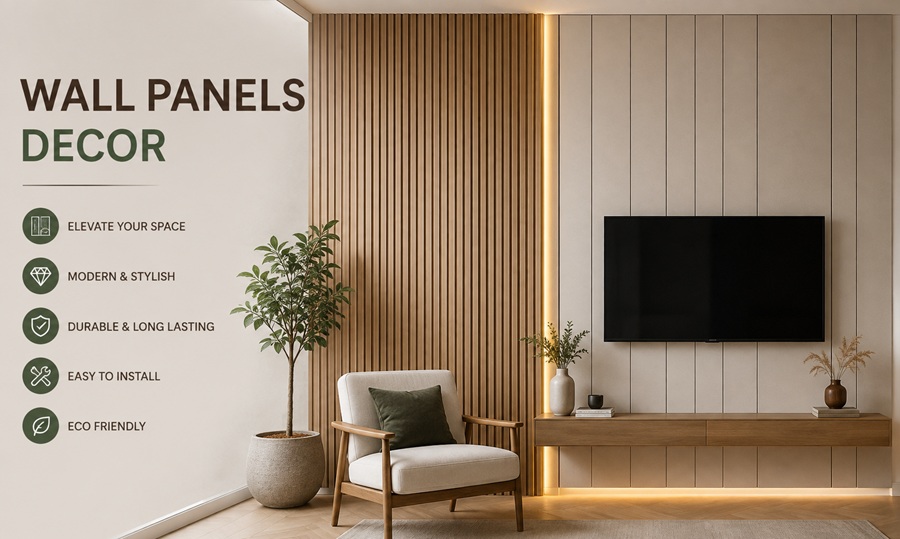
Wall panels decor covers any decorative panel system installed on a wall to add texture, dimension, or visual interest, from wood slats and PVC 3D tiles to fabric-wrapped panels and molded accent panels. Unlike paint or wallpaper, panels add physical depth to a wall, which is why they’ve become a go-to option for accent walls, headboards, and entryways.

What Counts as a Decorative Wall Panel
A decorative wall panel is a pre-formed piece of material, usually wood, MDF, PVC, or composite, that attaches directly to a wall to create a pattern, texture, or architectural detail. Panels differ from wallpaper because they sit off the wall surface, casting shadows and adding a tactile element that flat coverings can’t replicate.
Most panels fall into a few broad categories:
- Slat panels – vertical wood or MDF slats, often with a felt or acoustic backing
- 3D geometric panels – textured tiles in repeating shapes like waves, hexagons, or diamonds
- Shiplap and board-and-batten panels – horizontal or vertical boards that mimic traditional millwork
- Fabric or upholstered panels – padded panels often used behind beds or in reading nooks
- Moisture-resistant panels – PVC or composite panels rated for bathrooms and kitchens
- Mirror and mixed-material panels – panels that combine wood or MDF with glass, metal trim, or mirrored inserts for a more layered look
Each category serves a different purpose. Slat and 3D panels are chosen mainly for texture and shadow play, shiplap and board-and-batten lean into a more architectural, built-in appearance, and fabric panels prioritize softness and sound absorption over visual pattern.
How to Choose the Right Panel Style
The right choice depends less on trends and more on the room’s function, the wall’s condition, and how much of a visual statement you want.
Start by asking what the panel needs to do. A panel behind a television should stay understated so it doesn’t compete with the screen. A panel in an entryway can be bolder, since it’s meant to catch attention the moment someone walks in. A panel behind a headboard sits somewhere in between, since it needs to feel calming rather than busy but still add enough texture to justify the effort.
Lighting also matters more than most people expect. Slat and 3D panels rely on shadow to look their best, so a wall with strong, angled light (from a window or a well-placed sconce) will show off texture far better than a wall lit only by an overhead fixture. If the room only has flat, even lighting, a panel style that depends on shadow may look duller than expected, and it’s worth adding a small accent light or reconsidering a flatter panel style like shiplap.
Room size plays a role too. Panels with a strong repeating pattern can make a small room feel busy if used on every wall, while the same pattern on a single accent wall can make a small room feel more defined and intentional. Larger rooms have more flexibility, since there’s enough surrounding negative space for a bold panel wall to read as a feature rather than an overwhelming pattern.
Finally, consider the room’s humidity. Bathrooms, laundry rooms, and kitchens need panels rated for moisture, while solid wood slat panels are better suited to bedrooms, living rooms, and hallways. Using an unrated panel in a damp room risks warping, mold behind the panel, or adhesive failure over time.
Matching Panels to Existing Decor
Panels don’t exist in isolation, so it helps to think about how they’ll sit alongside furniture, flooring, and trim that are already in the room. A panel finish that’s close to the tone of existing floors or trim tends to blend in as part of the room’s structure, while a panel in a contrasting tone reads as a deliberate feature. Neither approach is wrong, but it’s worth deciding which effect you want before committing to a finish, since changing course after installation means redoing the work.
If the room already has a strong pattern, such as a patterned rug or bold artwork, a simpler panel style like flat board-and-batten usually balances the room better than an equally busy 3D or geometric panel.
Installing Wall Panels: The Basic Process
- Measure the wall and sketch the panel layout, including outlet cutouts and corner transitions.
- Check the wall surface for level and flat spots; panels amplify uneven walls rather than hiding them.
- Choose your mounting method — adhesive, nails, or a track system, depending on panel weight and wall type.
- Start from a visual center point rather than a corner, so the pattern reads as intentional.
- Leave small expansion gaps between panels if the material is wood, since humidity changes can cause slight movement.
- Seal edges and seams where needed, especially in high-moisture rooms.
- Reinstall outlet covers and trim last, once panels are fully secured, to avoid gaps around fixtures.
Working from a center point rather than an edge is one of the details that separates a professional-looking install from an uneven one, since it keeps any necessary partial panels at the less visible ends of the wall rather than right in the middle.
Mistakes That Undercut the Look
A common misstep is covering an entire room in panels when a single accent wall would have more impact and cost less. Another is ignoring outlet and switch placement until installation day, which forces awkward cuts. Skipping a level check is another frequent issue; panels installed slightly off-level become obvious once shadows fall across them.
Choosing a panel finish based only on a photo, without seeing a physical sample under the room’s actual lighting, also leads to disappointment more often than people expect, since panel tones can look noticeably different under warm versus cool lighting. Ordering a small sample before committing to a full wall’s worth of panels is a simple way to avoid this.
Caring for Panel Walls
Wood and MDF panels generally need only occasional dusting and a dry or slightly damp cloth. Avoid soaking any panel material, since trapped moisture behind the panel can warp it or affect adhesive backing over time. PVC and composite panels tolerate light cleaning with a mild soap solution, which makes them a practical choice for busier household areas.
Over time, wood panels may need a light refresh coat of stain or sealant, particularly in rooms with direct sunlight exposure, since UV light can gradually fade natural wood tones. Checking panels annually for loose edges or gaps, especially near seams, helps catch small issues before they require a larger repair.
Frequently Asked Questions
Do wall panels work in small rooms?
Yes, especially slat or vertical panels, which draw the eye upward and can make ceilings feel taller. Choose lighter finishes in small rooms to avoid a closed-in feel.
Can I install wall panels over existing wallpaper?
It depends on the wallpaper’s condition. Peeling or textured wallpaper should be removed first, since panels installed over an unstable surface can loosen over time.
Are wall panels a permanent change?
Not necessarily. Adhesive-mounted panels can often be removed with some wall repair needed afterward, while track-mounted systems are easier to take down without damage.
What’s the most budget-friendly panel option?
PVC and MDF panels are typically more affordable than solid wood, and pre-finished options reduce the need for painting or staining after installation.
Do wall panels help with sound in a room?
Slat panels with an acoustic felt backing can noticeably reduce echo in rooms with hard flooring, though they aren’t a substitute for full soundproofing.
How long does a typical wall panel installation take?
A single accent wall can often be completed in a weekend for someone comfortable with basic tools, while full-room installations or panels requiring custom cuts around outlets and windows generally take longer.