

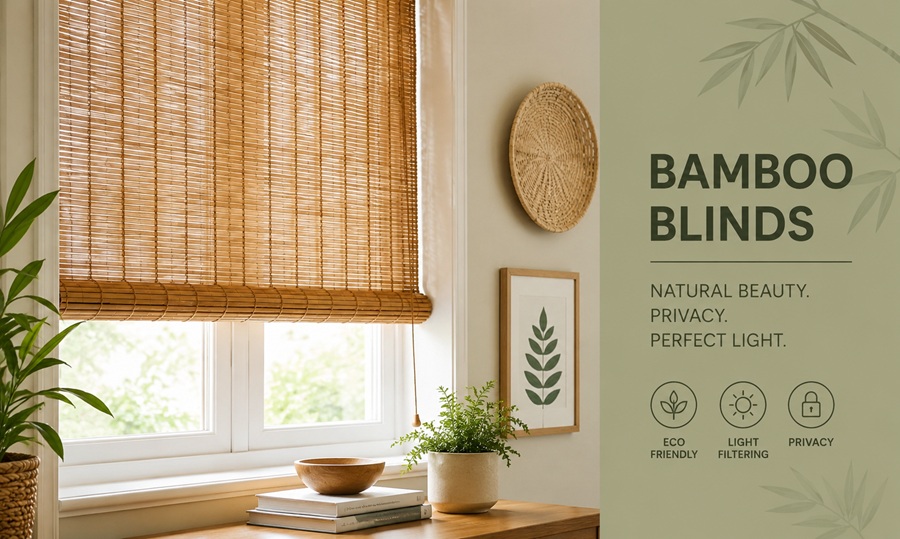
Bamboo blinds offer natural texture and moderate light and privacy control, working well for indoor living spaces and covered outdoor areas like patios and sunrooms alike. They’re a popular pick for anyone wanting a warmer, more organic look than vinyl or aluminum blinds without moving all the way to full fabric curtains. The questions below cover what most people want to know before buying — privacy, durability, cleaning, and where they perform best.

Examples: Best-Fit Rooms for Bamboo Blinds
Based on how bamboo blinds handle light, privacy, and moisture, they tend to perform best in these settings:
- Sunrooms — natural material complements the indoor-outdoor feel, and moderate light filtering suits a space that’s meant to feel bright.
- Covered patios — protected from direct rain, bamboo blinds add shade and texture without blocking airflow entirely.
- Living rooms — a natural texture pairing well with wood furniture, woven textiles, and other organic decor elements.
- Home offices — light filtering reduces glare on screens while still allowing enough natural light to work by.
Installing Bamboo Blinds
Most bamboo blinds mount using a simple bracket system that attaches to the window frame or the surrounding wall, and installation is typically a straightforward DIY project that takes 15 to 30 minutes per window with a drill and basic hardware. Inside mount, where the blind sits within the window frame, gives the cleanest look but requires enough frame depth to fit the mounting brackets. Outside mount works for any window and is often the easier choice for blinds that need to block more light, since it can extend slightly beyond the window opening on all sides.
For rental homes where drilling isn’t allowed, tension-mounted or adhesive-bracket versions are available for lighter-weight bamboo blinds, though they generally aren’t rated for the same size or weight range as a fully drilled installation.
Bamboo Blinds vs. Wood Blinds
Bamboo blinds and traditional wood blinds share a natural material appeal but differ in texture, weight, and price. Bamboo’s woven construction gives it a looser, more casual, textured look, while wood blinds use solid slats for a more structured, formal appearance with tighter light control when fully closed. Bamboo blinds are generally lighter in weight and slightly more affordable than comparable wood blinds, though wood offers marginally better full-light-blocking capability when fully rotated closed.
The choice often comes down to the room’s overall style — bamboo suits coastal, bohemian, and relaxed interiors, while wood blinds fit more traditional or formal spaces where a crisper, more tailored look is the goal.
Roll-Up vs. Roman-Style Bamboo Blinds
Roll-up bamboo blinds gather into a tight roll at the top of the window when raised, giving the simplest, most minimal profile and typically the lowest price point of the bamboo blind styles. Roman-style bamboo shades fold into neat horizontal pleats when raised, similar to a fabric roman shade, offering a slightly more tailored, structured look at a modestly higher price. Both use the same woven bamboo material and offer similar light filtering, so the choice mostly comes down to the preferred stacking look at the top of the window when the shade is raised.
Putting It Together
Bamboo blinds are best suited to living spaces, sunrooms, and covered patios where their natural texture and moderate light control can shine, and less suited to bathrooms, fully exposed outdoor areas, or any window where complete privacy or full moisture resistance is the top priority. For those specific needs, pairing bamboo blinds with a liner, or choosing a different material altogether for wet rooms, solves the gap without giving up the look in the rest of the home.
Frequently Asked Questions
Do Bamboo Blinds Provide Privacy?
Standard woven bamboo blinds offer partial privacy during the day, since the natural weave still allows some visibility through small gaps, especially up close. At night, with interior lights on, visibility from outside increases unless the blinds are paired with a liner or backing fabric, which is worth adding for bedrooms or any street-facing window where full privacy matters.
Are Bamboo Blinds Durable Outdoors?
Bamboo blinds hold up well in covered outdoor spaces like patios, porches, and sunrooms where they’re protected from direct rain, but they aren’t designed for full sun and moisture exposure over time — direct weather causes the natural material to warp, fade, or mildew faster than it would indoors. For fully exposed outdoor areas, a blind specifically rated for outdoor use, rather than a standard indoor bamboo blind, holds up significantly longer.
How Do You Clean Bamboo Blinds?
Regular dusting with a microfiber cloth or a vacuum brush attachment handles most day-to-day maintenance, since bamboo blinds trap dust in their woven texture more than flat vinyl blinds do. For deeper cleaning, a damp cloth with mild soap works for spot cleaning, but bamboo blinds should never be fully soaked or machine washed, since prolonged water exposure can warp the natural material.
Are Bamboo Blinds Good for Humid Rooms?
Bamboo blinds aren’t the best choice for consistently humid rooms like bathrooms or laundry rooms, since prolonged moisture exposure can cause warping, discoloration, or mold growth over time. For those spaces, a moisture-resistant material like faux wood or vinyl blinds is a safer long-term choice, with bamboo reserved for drier living spaces.
How Much Do Bamboo Blinds Cost?
Standard bamboo blinds typically run $30 to $100 per window for stock sizes, while custom-fit options for oversized or unusually shaped windows run $100 to $300. Roll-up styles tend to sit at the lower end of that range, while roman-style bamboo shades with more structured folds and additional hardware cost somewhat more.