

Direct Answer
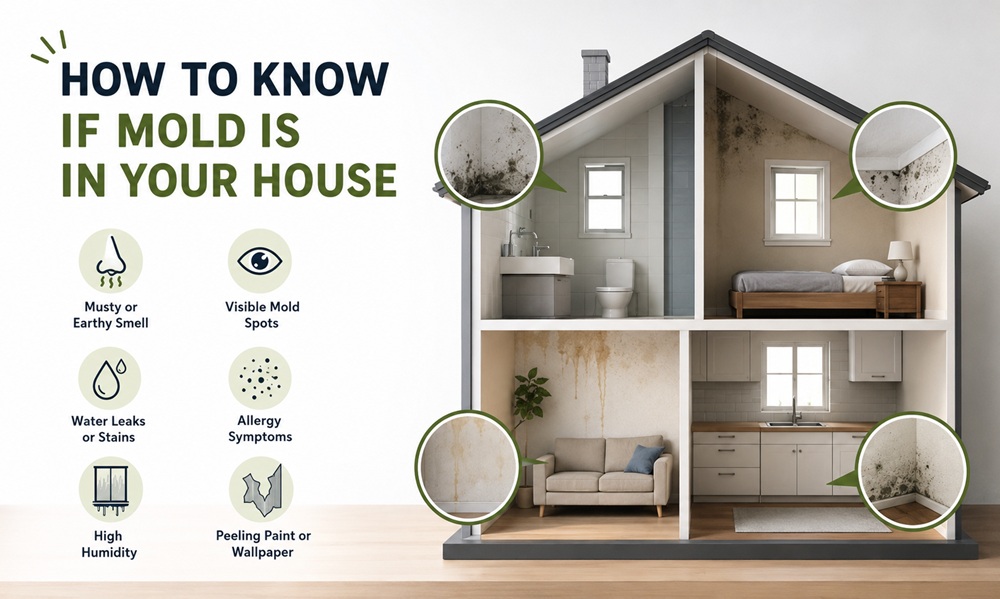
The clearest signs of mold in a house are a persistent musty smell, visible dark or fuzzy spots on walls or ceilings, and unexplained allergy-like symptoms such as coughing or itchy eyes that improve when you leave the house. Mold often hides behind walls, under carpets, or inside AC ducts before it becomes visible, so a smell without a visible source is still worth investigating.

Can You Smell Mold Before You See It?
Yes, and this is often the first warning sign. Mold produces a musty, earthy odor as it grows, even in early stages when it’s too small or too hidden to see. If a specific room consistently smells damp or stale regardless of cleaning, treat that as a signal to look closer at nearby walls, floors, or vents.
Example: The Basement That Smelled Fine to Look At
A common scenario: a finished basement looks completely normal, but there’s a persistent musty smell near one corner. The homeowner assumes it’s just “basement smell” until someone moves a bookshelf and finds mold growing on the drywall behind it, fed by a small foundation crack that let moisture in during heavy rain. The lesson here is that smell often outpaces visible evidence by weeks or months.
Where Does Mold Usually Hide?
Mold favors dark, damp, poorly ventilated spaces: behind bathroom tile, under sink cabinets, inside HVAC ductwork, behind furniture pushed against exterior walls, and beneath carpet padding near windows or exterior doors. Attics and crawl spaces are also common hiding spots, especially after roof leaks or poor ventilation traps humidity.
What Health Symptoms Suggest Mold Exposure?
Common symptoms include a persistent cough, nasal congestion, itchy or watery eyes, throat irritation, and headaches that improve noticeably when you spend time away from home. People with asthma or mold allergies may notice more pronounced reactions. These symptoms alone don’t confirm mold, but combined with a musty smell, they’re a strong reason to inspect further.
Example: The AC Vents That Made Everyone Sneeze
In one common case, a family notices everyone sneezes more when the air conditioning runs, but not when windows are open. A technician finds mold growing inside the ductwork, likely from years of condensation buildup that was never cleaned out. This illustrates how HVAC systems can spread mold spores throughout a house even when no mold is visible in any single room.
Should You Test for Mold Yourself?
DIY test kits can confirm mold spores are present, but they can’t reliably identify the species or tell you how serious the infestation is. They’re useful as a first check when you suspect a problem but see nothing visible. For anything beyond a small, contained spot, a professional inspection gives a far more accurate picture.
How to Check for Mold Room by Room
- Bathrooms: check grout lines, under the sink, and around the tub caulking
- Kitchen: inspect under the sink and behind the refrigerator
- Basement: look at corners, behind stored boxes, and near the foundation
- Bedrooms: check window sills and behind large furniture on exterior walls
- Attic: look for dark staining near the roofline after any past leaks
What’s the Difference Between Mold and Mildew?
Mildew is a surface-level fungus that appears flat, white, or gray and is common on damp surfaces like shower tile. Mold grows deeper into materials, often appears black, green, or dark brown, and can cause structural damage over time. Mildew is generally easier to clean with a surface scrub, while mold usually requires removing and replacing the affected material.
Example: The Windowsill That Was Always Wet
A homeowner in a cold-climate state kept noticing condensation pooling on their bedroom windowsill every winter morning. They wiped it up and moved on for months, until they noticed the wood trim below the sill had started to darken and soften. Removing the trim revealed mold growth that had been feeding on that daily condensation. The takeaway: recurring condensation isn’t just an annoyance, it’s a moisture source mold will eventually use if left unaddressed.
When Should You Call a Mold Inspector Instead of Handling It Yourself?
Call a professional if the affected area is larger than about 10 square feet, if mold keeps returning after cleaning, if it’s inside HVAC ductwork, or if anyone in the household has a compromised immune system or severe asthma. Professionals use moisture meters and, when needed, air sampling to find hidden mold that a visual check alone would miss.
A Simple Home-Wide Mold Check You Can Do This Weekend
Set aside thirty minutes to walk through every room with a flashlight, checking the spots outlined above room by room. Bring a notepad or your phone to jot down any musty smells, discoloration, or soft spots you find, even if they seem minor, so you have a record to compare against on your next check.
Pay particular attention to any room that was affected by a leak or flooding in the past, even if it was fully repaired at the time, since mold can resurface in materials that weren’t completely dried out during the original cleanup.
FAQ
Can mold grow without visible water damage?
Yes, mold can grow from humidity alone in poorly ventilated spaces, even without a specific leak or flood event, particularly in bathrooms and basements.
How long does it take mold to start growing after water exposure?
Mold can begin growing within 24 to 48 hours after materials stay wet, which is why drying out water damage quickly matters.
Is black mold more dangerous than other types?
Certain species produce mycotoxins that can cause stronger reactions in sensitive individuals, but any mold type can cause health symptoms and should be removed regardless of color or species.