

Most people picture mold as a sudden event, a dark patch that shows up overnight and ruins a weekend. It is really a slow chain reaction, and the crews who watch it play out most often are restoration teams like Mold Defense LLC, a certified group serving homes and businesses across New Jersey, Delaware and Pennsylvania, whose work runs from inspection and testing through removal and structural drying. Their approach is built around the idea that a cleanup only counts if the mold stays gone. The easiest way to understand why is to follow the clock on one ordinary leak.

The First Hour, When Nothing Looks Wrong
Picture a joint under the bathroom sink that weeps a few drops every hour. The water runs along the pipe, pools in the bottom of the vanity, and begins soaking into the back panel and the drywall behind it. Drywall acts like a sponge, pulling moisture upward through the paper facing far beyond the original wet spot.
From the room, you see nothing. The cabinet door closes, the floor stays dry, and the bathroom smells like a bathroom. Meanwhile mold spores, which are already floating through almost every indoor space, land on a surface that has just become interesting to them. They are dormant, not absent, and that distinction explains most of what follows.
Day One and Two, the Window That Matters
Mold generally needs about a day or two of sustained dampness before it starts to take hold. This is the most useful fact in the whole story, because it means a fast response can end the problem before it begins.
Paper backing on drywall, bare wood framing, insulation, carpet padding and even dust all work as food. If the area dries out within that early window, the spores simply stay asleep. If it does not, they begin to germinate and spread across the damp material.
For a small spill, towels, a wet vacuum, a fan and a dehumidifier are usually enough. For a burst pipe or a washing machine hose that let go while you were out, the water has often traveled into wall cavities and under flooring. That is where professional structural drying earns its keep, using air movers and moisture meters to find water you cannot see. Sewage backups are a different category entirely, since the water carries bacteria and should be handled with proper protective gear or left to trained crews.
Day Three and Beyond, When the House Starts Talking
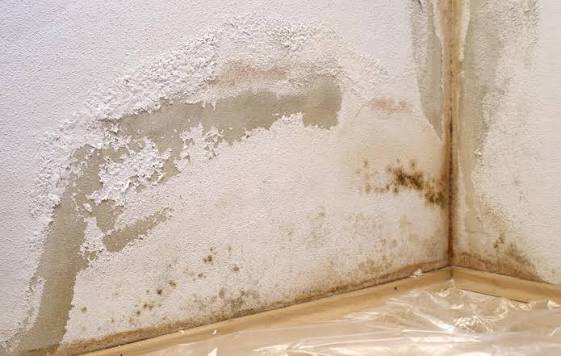
After several days of dampness, colonies are established and the house begins to give hints. A musty odor shows up, especially when a room has been closed for a while. Paint bubbles or peels. Baseboards cup slightly. A faint gray, green or black bloom appears in a corner or along a seam.
The smell deserves special attention. A musty odor with no visible source usually points to moisture somewhere out of sight, such as behind a wall, under a floor or above a ceiling. People often respond by masking it with air fresheners, which is a bit like turning up the radio to ignore a strange engine noise.
What Mold Actually Needs
Mold is not mysterious. It asks for four things.
- Moisture, which can come from leaks, flooding, condensation or high humidity.
- Organic material to eat, which every home supplies in the form of wood, paper, fabric and dust.
- Moderate temperatures, roughly the same range people find comfortable.
- Time, which is the ingredient you have the most influence over.
You cannot remove food or comfortable temperatures from a house in any practical way. Moisture is the one lever you can pull, which is why extension programs at universities say, again and again, that controlling mold really means controlling water.
Where Leaks Like to Hide
Some spots cause trouble far more often than others, and checking them takes ten minutes.
- Under sinks and behind dishwashers, where small supply line drips can go unnoticed for months.
- Around windows, particularly where caulk has cracked or seals have failed, letting rain and condensation reach the framing.
- Attics, where roof leaks and poor ventilation leave sheathing and insulation damp.
- Basements and crawl spaces, where groundwater, foundation seepage and humid summer air all collect.
- Air conditioning drain lines and ductwork, which can sweat and spread moisture through a surprising portion of the house.
- Behind shower tile, where failed grout or sealant lets water into the wall.
Dry to the Touch Is Not the Same as Dry
A surface can feel fine while the material beneath it is still wet. This is why moisture meters are standard equipment for restoration professionals, and why homeowners are often surprised when a “dried” area grows mold a few weeks later.
Material type changes the outcome too. Hard, nonporous items such as metal, glass and sealed tile can usually be cleaned and kept. Porous materials such as ceiling tiles, insulation and carpet padding that stayed wet for more than a couple of days are often better replaced than rescued, since mold growth goes below the surface where wiping cannot reach. Painting over a stain or spraying bleach on it tends to hide the symptom while the cause keeps feeding it.
Cleaning It Yourself, Testing It, and Knowing When to Stop
A small patch, generally smaller than about ten square feet, is something many homeowners can handle. Wear an N95 respirator, gloves and goggles, keep the area ventilated, scrub the surface with detergent and water, and dry it completely. Then fix whatever made it wet, because cleaning without repairing only resets the clock.
Larger areas call for a different plan. So does any mold connected to the HVAC system, any growth that followed floodwater or sewage, and any household where someone has asthma, allergies or a weakened immune system. In those cases, bringing in certified inspectors and remediators is the safer path, and the containment, air filtration and careful removal they use exist for good reasons.
Testing has its place, but it is often misunderstood. Air and surface samples can show what kind of mold is present and roughly how much, which helps when you smell something and cannot find it, or when you want to confirm a cleanup actually worked. They cannot, on their own, tell you how a particular person will react. Buyers, sellers and landlords sometimes ask for written documentation as well, so having an inspection on record can smooth out a transaction.
Keeping the Clock From Ever Starting
Prevention is far cheaper than any of the stages above, and most of it is routine habit rather than a project.
Aim to keep indoor humidity somewhere between 30 and 50 percent. A small hygrometer costs very little and takes the guesswork out of it. Run bathroom exhaust fans during showers and for several minutes afterward, and use the range hood while cooking. Fix dripping faucets and slow leaks quickly, even if they seem trivial. Keep gutters clear and downspouts pointed away from the foundation, and make sure the soil around the house slopes away rather than toward it. Give closets and stored boxes some breathing room, since stagnant, damp air in tight spaces invites growth.
The University of Minnesota Extension has a helpful guide to moisture and mold indoors that walks through symptoms, sources and fixes in plain language.
Every mold problem starts as a moisture problem, usually a small one that went unnoticed for a day or two too long. Learn the timeline, check the usual hiding places a few times a year, and treat a musty smell as information rather than an annoyance. Houses tell you a great deal if you are willing to listen early.