

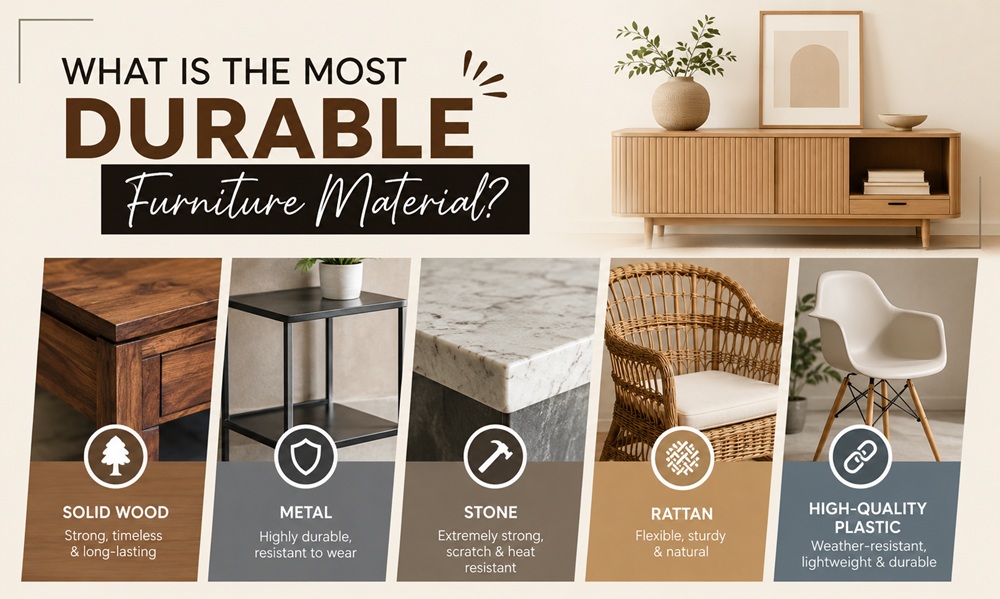
Solid hardwood, such as oak, maple, or teak, and welded metal frames rank as the most durable furniture materials available, often lasting decades with basic care. Engineered wood, particleboard, and thin veneers sit at the other end of the durability spectrum, typically needing replacement within 5 to 10 years under regular use.

If you’re shopping for furniture that will actually last, here’s how the major material categories compare, along with practical advice for choosing based on how a piece will actually be used and where it will live in your home.
What Makes a Furniture Material Durable?
Durability comes down to a few core factors: resistance to warping or cracking under humidity changes, structural strength at joints and stress points, and how well the material holds up to daily wear like scratches, dents, and weight. Solid materials generally outperform engineered or composite alternatives because there’s no glued-layer structure that can delaminate over time.
Density also plays a bigger role than most shoppers realize. Hardwoods like oak and maple rate significantly higher on the Janka hardness scale, which measures resistance to denting, than softer woods like pine, meaning two pieces that look similar on a showroom floor can perform very differently after a few years of real use.
Solid Wood vs. Engineered Wood: Which Lasts Longer?
Solid hardwood furniture, built from a single piece of wood rather than layered composite material, can last 25 to 50 years or more with proper care, and pieces are often refinished rather than replaced when they show wear. Common durable hardwoods include oak, maple, walnut, and teak, each offering strong resistance to scratching and structural stress.
Engineered wood, including plywood, MDF, and particleboard, is more budget-friendly but far less durable. Particleboard in particular is prone to swelling and crumbling if exposed to moisture, and it doesn’t hold screws or joint hardware as securely as solid wood over repeated use. Furniture built from engineered wood typically lasts 5 to 15 years depending on quality and how carefully it’s used. Quality plywood, which is layered rather than compressed like particleboard, sits in a middle tier, often lasting 15 to 25 years since its cross-grain layering actually resists warping better than solid wood in some applications.
Metal Frame Furniture Durability
Metal furniture, particularly welded steel or wrought iron frames, offers excellent structural durability and resistance to warping, since metal doesn’t expand and contract with humidity the way wood does. Metal frames are common in outdoor furniture, industrial-style pieces, and bed frames because they hold weight well and rarely develop the loose joints that plague lower-quality wood furniture over time.
The main downside is rust risk for uncoated or poorly finished metal, especially in outdoor or humid environments. Powder-coated or galvanized metal furniture resists corrosion significantly better than untreated steel, and stainless steel, while more expensive, essentially eliminates rust concerns entirely, making it a strong choice for coastal homes or humid climates.
Best Durable Fabrics for Upholstered Furniture
For upholstered pieces, durability depends heavily on the fabric’s rub count, measured in double rubs on the Wyzenbeek or Martindale test. Performance fabrics like Crypton and tightly woven materials like canvas or heavy-duty polyester blends typically test above 30,000 double rubs, making them suitable for high-traffic households with kids or pets.
Leather, particularly full-grain leather, is another highly durable upholstery option, often lasting 15 to 20 years or more and developing a desirable patina with age rather than showing wear the way fabric does. Bonded or “faux” leather, by contrast, typically cracks and peels within 3 to 5 years, so it’s worth checking the product listing carefully, since the difference isn’t always obvious from photos alone.
Is Teak the Best Material for Outdoor Furniture?
Teak is widely considered one of the best materials for outdoor furniture because of its natural oil content, which resists rot, insects, and water damage without requiring sealant. Teak furniture left outdoors year-round can last 50 years or more, developing a silvery-gray patina if left unfinished, or maintaining its original color with periodic oiling.
Other strong outdoor options include eucalyptus (a more affordable hardwood alternative) and powder-coated aluminum, which resists rust entirely since aluminum doesn’t corrode the way steel does. Wicker and rattan, while attractive, generally rank lower for outdoor durability unless it’s synthetic resin wicker specifically engineered for UV and moisture resistance, since natural wicker degrades relatively quickly with direct sun and rain exposure.
Material Comparison at a Glance
| Material | Typical Lifespan | Best Use Case |
| Solid hardwood (oak, maple, walnut) | 25–50+ years | Tables, chairs, dressers |
| Teak | 40–50+ years | Outdoor furniture |
| Welded steel / wrought iron | 20–30+ years | Bed frames, outdoor furniture |
| Full-grain leather | 15–20+ years | Sofas, chairs |
| Plywood (quality grade) | 15–25 years | Cabinetry, shelving |
| MDF / particleboard | 5–15 years | Budget furniture, flat-pack items |
Expert Advice for Choosing Durable Furniture on a Budget
You don’t need to buy all solid hardwood to get lasting furniture. A hybrid approach, solid wood legs and frames paired with quality plywood panels for less visible sections like drawer bottoms or cabinet backs, is common even in higher-end furniture and offers a good durability-to-cost balance.
Check joinery before buying. Dovetail joints, mortise-and-tenon construction, and screwed (rather than stapled or glued-only) connections all indicate a piece built to last. Avoid furniture where panels are held together primarily with adhesive and thin dowels, since those joints tend to loosen within a few years of regular use.
Best Material for Kids’ Furniture
For furniture that will take a beating from children, solid wood with a durable painted or sealed finish tends to outperform both particleboard and unfinished soft woods like pine. Powder-coated metal bed frames and desks are also a strong choice for kids’ rooms, since they resist dents and scratches far better than laminate surfaces, which chip easily under repeated impact.
Avoid furniture with exposed particleboard edges in kids’ spaces specifically, since these edges are the first place to swell or chip when exposed to spilled drinks or general rough handling.
How Climate Affects Furniture Material Choice
Humidity swings are one of the biggest hidden threats to furniture longevity, particularly for solid wood, which expands and contracts as moisture levels change. In very humid climates, wood furniture benefits from a quality sealant finish to slow moisture absorption, while in dry climates, cracking is more of a concern than swelling.
Metal and synthetic materials are largely unaffected by humidity, which is part of why they’re popular choices for furniture in coastal or high-humidity regions where wood furniture requires more maintenance to stay in good condition.
Final Recommendation
If budget allows, prioritize solid hardwood or teak for statement pieces you plan to keep long-term, like dining tables or bed frames, and reserve engineered wood for lower-stress items like bookshelves or closet organizers where the durability tradeoff matters less. This hybrid approach is how most furniture, even from premium brands, balances cost against long-term durability.